

This article originally appeared in Connect magazine.
Is there still a place for Advisory Stockbroking – what are the benefits of having a personal relationship vs relying on AI?
AI poses both threats and opportunities to almost every business. In the fast-moving world of financial markets, AI is already having a profound impact on how retail and institutional investors invest. Ever since financial markets “Big-Bang” in 1986, brought about by Margaret Thatcher, equity trading has become ever more increasingly automated. At the time the Big Bang helped London cement its position as the world’s leading financial centre, so poor Maggie will be turning in her grave to learn London now ranks behind Oman in new equity issuance!
Today, the vast majority of equity trades are undertaken by bots and algorithmic trading systems, with AI able to process huge amounts of data in real time, and machine learning detecting patterns humans would likely miss. As a result, trading is becoming faster, more data driven, and more automated than ever before. Anyone who has read Michael Lewis’s “Flash Boys” will understand how the fastest, most advanced trading systems will make the most money, so called “High Frequency Trading” strategies. However, for Flash Boys also read Flash Crash, an episode in 2010 which highlighted the dangers of fully automated trading without human oversight. It lasted a matter of minutes but wiped $1 trillion of value from US equities. The crash was exacerbated by automated passive investment strategies, the increasingly prevalent Exchange Traded Funds (ETFs). ETFs are rebalancing continually to track underlying indices, but in this instance they could not keep pace with the underlying equity holdings sudden price moves and so created further extreme selling pressure in a short space of time. The crash was eventually blamed on a British trader who used so called “spoofing algorithms”, mimicking hundreds of millions of dollars’ worth of futures contract sale orders to bet that the US market would fall, this caused significant order imbalance which accelerated due to ETF selling. This type of trading activity has subsequently been banned, but it helps highlights the risk of unfettered automated trading, and the importance of human oversight and regulation.
Faster markets have driven elevated single stock volatility, and therefore often irrational price movements. Renowned economist John Maynard Keynes once quipped “the market can remain irrational longer than you can remain solvent”. Investing in equities requires one to predict the future, an imperfect science unless you have a crystal ball, and because of this financial markets are often driven by human emotion, not by AI or robotic practices largely relying on historic data. When investors are optimistic about the future, they are prepared to pay a high price, but when they are nervous about the future, they may sell at a much lower price. This is irrational behaviour as economic theory dictates lower prices should attract greater buying interest.
Wild swings in investor behaviour are neatly evidenced by the world’s largest listed equity today, and so the largest holding in most passive investment strategies, Nvidia. In the past 10 months alone, Nvidia has seen its shares near halve, before rising 125% from the lows. Earnings grew consistently over this same period, so logic would dictate a more smoothly ascending price chart. The world’s greatest human investor, Warren Buffett, prefers to be “greedy when others are fearful and fearful when others are greedy”, which requires one to take a contrarian stance. Using the Nvidia example, this would be buying in the teeth of Donald Trump’s Liberation Day tariffs, but would AI be inclined to recommend such a strategy?
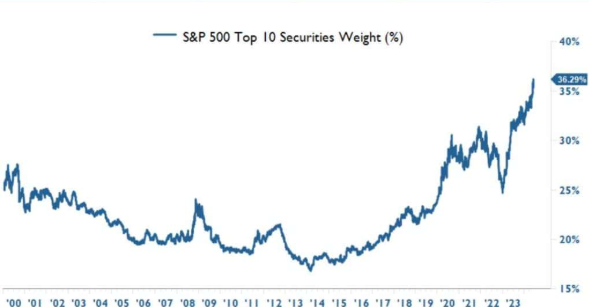
I recently asked Microsoft’s AI companion Copilot which were the best equities to invest in today. Nvidia featured as did Tesla and multiple other US technology shares, most of which were trading at or near all-time highs. Indeed, of the 10 investments recommended, only two were not US technology stocks, at a time when there is record concentration of US-listed Technology stocks in global equity indices, and renowned technology investors, such as Baillie Gifford’s James Anderson, warn of “disconcerting signs” of an AI bubble. The limitations of using AI to invest were illustrated in January, when DeepSeek sent shockwaves through the listed technology sector. AI still largely depends on historical data and so may not be best placed to detect such sudden, disruptive innovations. Equally algorithms are trained on past market conditions and so could struggle when faced with new economic or market environments, whereas an experienced investment professional can use their intuition to make a judgement call.
In an uncertain world, a second opinion from an investment professional may help improve investor outcome, just as consulting a second medical practitioner may give a patient a better chance of recovery. Four eyes are better than two, and Advisory stockbrokers would typically have access to sophisticated trading platforms and a wealth of news and research unavailable to most investors. Your stockbroker may pick up something you or AI might miss. Technology remains a volatile sector, and one that is increasingly interlinked. It is not a basket to have all your eggs in, especially when valuations are elevated and concentration risk is high. In the above example, we believe an Advisory stockbroker would advise how to achieve superior portfolio diversification and better downside protection than AI’s recommendations.
Interestingly Copilot’s non-tech recommendations included UK-listed Rolls Royce, also within a whisker of all-time share price highs. Rolls Royce was a recommendation of the Titan Wealth’s Advisory Stockbroking team in early 2022 when the world was emerging from another sudden, unexpected shock, Covid. We cannot vouch for what AI models were recommending at the time, but it is unlikely that they would have included a heavily loss-making UK equity valued worth just £5bn. Even the analyst community had consensus price targets of 100p or below, less than 1/10th of Rolls Royce value today. Markets are often too short term, particularly when investors are risk averse, and therefore unable to look beyond the current cycle, which in Rolls Royce case simply meant more wide-bodied aircraft flying. Our investment advice at the time was predicated on Rolls Royce equity being worth well below the sum of its parts, at a cyclical low point, whilst also having various sources of free upside optionality. Put more simply, we assessed that the odds were well in investors’ favour. As Warren Buffett would say, “price is what you pay, value is what you get”. At a share price of less than £1 in 2022, we consider that Rolls Royce shares offered more value than they do today at over £11 per share (as of the time of writing). Or as stockbrokers used to say, “when it’s in the newspaper, it’s in the price.”
Parts of the market, including commodities, derivatives and the institutional bond market, still transact “over the counter” between human market makers. Automated and online trading platforms are less able to access this market, so a full-service stockbroker can offer significant benefit and advice. Likewise, trading in small cap shares often requires speaking to human market makers, not something AI can do yet, and even if it could, it is unlikely to be friends with these market makers and achieve the best prices!
AI is changing how we and others work, providing immense benefit to research and analysis. When combined with human oversight, it is possible to blend the quantitative skills of AI with many years of human market experience. The future of stockbroking is not a contest between AI and humans, but by blending the best of both we hope to be able to continue to provide a superior service to our fellow humans!