
Key highlights:
- The two-week ceasefire in the Iran war is the clearest sign that the end of the conflict and the ensuing economic disruption is in sight.
- There are several possible outcomes, but the most likely is that the Iranian regime survives, retains control of the Strait of Hormuz, and all sides stand down claiming victory.
- The global economy was in good shape pre-war and could surprise on the upside.
- Any negative impact on inflation will likely be short-lived, and the Federal Reserve could still cut rates later this year or early next year.
- I remain bullish on global equities provided earnings hold up as expected. A dovish Federal Reserve, falling bond yields and cheaper valuations are supportive factors.
- The dollar will likely resume its depreciation once the fighting subsides, which will also support the global economy and markets.
- Gold remains in a long-term bull market.
- The war is further evidence of the ‘Changing World Order’ and the ‘Fracturing Global Economy’.
- We see plenty of attractive investment opportunities and have repositioned our portfolios for the evolving macro environment. Adaptability and flexibility are key.
Before the advent of the Iran war, the global economy looked in good shape, with activity expected to accelerate modestly at the same time as softening inflation in the US would allow the Federal Reserve (“Fed”) to cut interest rates several times. This was a positive macro backdrop for financial markets as well, and generally it had been a strong start to the year for equities, with a continuation of many of the trends that developed last year.
This outlook changed with the start of the Iran war, and it is clear that the longer the fighting continues, the greater the likelihood of a deterioration in the macro picture, with downside risks to economic growth and upside risks to inflation.
A ceasefire signals the beginning of the end
The good news is that both the US and Iran have “stepped back from the brink” and agreed a two-week ceasefire whilst talks continue to try to find a longer-term resolution. Markets responded positively to the news, but significant hurdles still need to be overcome between the US, Iran and Israel before we see a lasting end to the war.
For example, it is difficult to envisage the US accepting Iran’s continued uranium enrichment, the removal of all US forces and bases from the region, and Iran controlling the Strait of Hormuz. There is still a lot of uncertainty, but the announcement is the clearest sign yet that the end of the conflict, and the ensuing economic disruption, is in sight. It also reduces the risk of the worst-case scenario, but returning to the status quo may take longer than expected.

Winners and losers will emerge
There are a number of possible outcomes to the war, including regime change, which would clearly be the best outcome for markets and the economy. Perhaps more likely, however, is that the Iranian regime survives and retains control over the Strait of Hormuz, and the war ends with a mutual stand-down and all sides claiming victory. The latter outcome would create several longer-term issues to resolve, such as the lasting relationship between Iran and the Gulf states, a likely acceleration of Iran pursuing its nuclear ambitions, and the possible breakup of NATO. However, the main concern for markets right now is a cessation in the fighting and a return to the favourable macro environment that prevailed pre-crisis.
It is also evident that there are winners and losers from the war, whichever way it ends. The US economy is very unlikely to be materially damaged as it is a net energy exporter, is benefiting from a capital investment boom in AI-related spending, has significantly reduced its dependency on oil over the past few decades, and continues to benefit from expansionary fiscal policy and relatively easy monetary policy. This is especially true as Trump will refocus on domestic policies, including further deregulation and fiscal stimulus, as the war winds down in an effort to win the mid-term elections later this year.
China and Russia are also beneficiaries of the war, partly due to their energy advantages and partly because the conflict may have damaged America’s credibility. Asian and European economies, as net energy importers, are more vulnerable to both an escalation of the fighting and the longer-term consequences, but would be expected to bounce back strongly following a near-term resolution and a swift reduction in oil and gas prices.
From a growth perspective, it is important to highlight that the global economy was in good shape coming into the war, thanks to a resilient US economy, an AI-related investment boom, expansionary fiscal policies in major economies, and modestly accommodative monetary policies. It is also worth noting that, based on numerous similar energy shocks, it typically takes a doubling of oil prices sustained over several months to have a material impact on either inflation or growth.
In addition, oil dependency has reduced significantly across major economies over the past 30 years, partly due to a shift towards services-based growth and partly due to the rise of alternative energy sources. For example, the US consumer spends approximately 3% of disposable income on oil and gas, compared to over 8% in the 1970s and 1980s. The war, whatever the outcome, will do little to weaken the excitement around AI, data centres, life sciences and space exploration.
Economic data is holding up better than expected
Surprisingly, the most recent economic data points to strengthening activity worldwide despite the war, with a broad pick-up in global manufacturing, global trade and US consumer confidence. It is certainly true that there will be some economic damage, most notably in the region itself and in some Asian and European economies. However, assuming the conflict de-escalates by the end of this month and energy prices gradually return to pre-war levels, I think we will be surprised by how resilient global growth is and how quickly it recovers.
This is especially true as one of the long-term consequences of this event is that global governments everywhere will need to increase spending on defence, energy security, supply chain management of food, fertilisers and other essential commodities, income and wealth inequality, essential infrastructure, an ageing demographic and climate change. Hence fiscal policy will need to be very expansionary moving forward and central banks will be forced to keep monetary policy relatively loose given the rising levels of global debt.
Inflation in the major economies will be higher for a while as a result of the energy shock and the longer it lasts the bigger the risk; inflation could rise to in excess of 4% in the UK and 3.5% in the US and Europe. However, there are several factors that will almost certainly keep central banks from raising rates any time soon. The Fed and other central banks are acutely aware that higher rates are not necessarily the answer to supply side shocks and that energy price inflation pressures tend to be transitory. Higher inflation and energy prices will eventually dampen economic activity whilst higher bond yields and lower equity prices will tighten financial conditions and result in lower growth and falling inflation. In other words, the economy and markets do the Fed’s job.
The trajectory of inflation and resulting central bank action will also depend on the underlying economic conditions at the time. As an example, the US economy is in a very different place now than when Russia invaded Ukraine in 2022. Back then interest rates post-Covid were very low, there was an abundance of liquidity in the system, the labour market was very tight, and demand was booming post the Covid re-opening. Also, the Fed is about to have a new Chair and is likely to shift subtly to a more dovish stance at a time when the second part of its mandate, employment, is also becoming more of a focus.
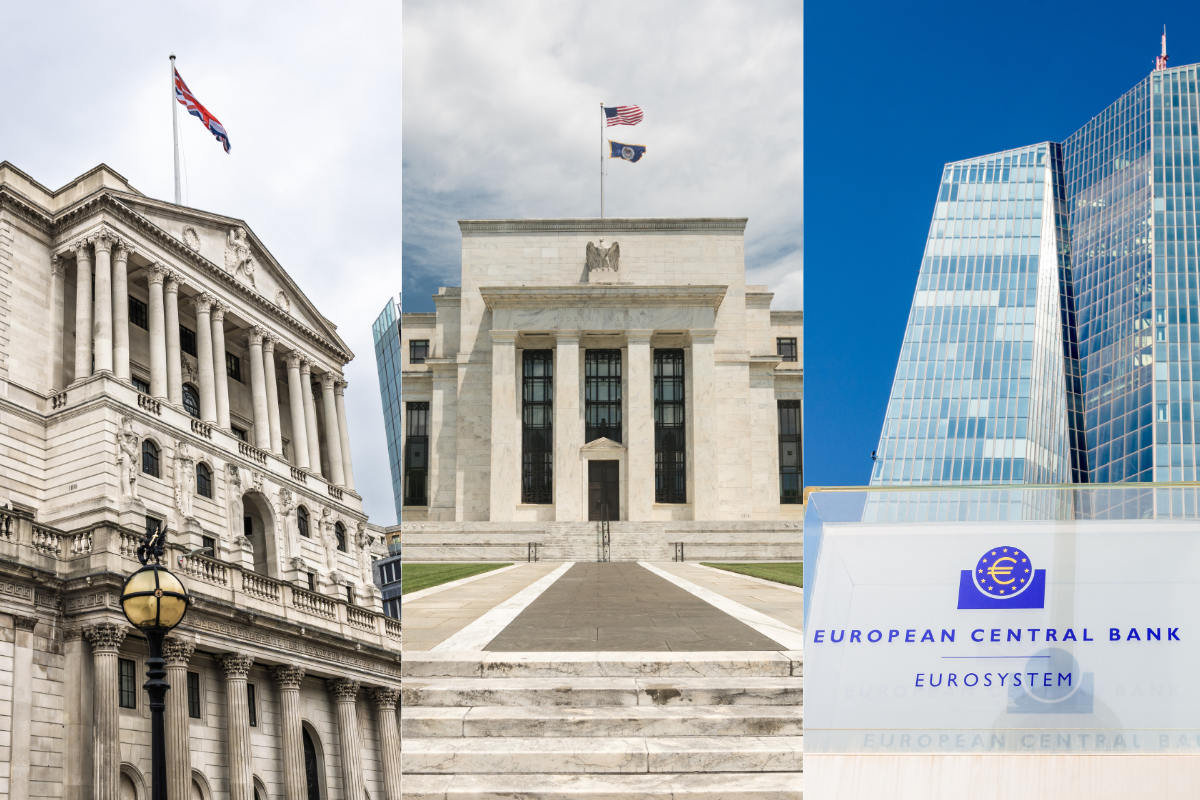
In addition, the Fed will enjoy watching the disinflationary impact of rising productivity thanks to an investment boom. The Bank of England and European Central Bank have tougher jobs but even here, I expect both central banks to stay on hold for many months whilst they await clarity on the war and resulting economic impact. On balance I think the Fed could still cut rates two or three times later this year and into 2027 and rate hikes currently priced into markets are excessive. This is another supportive factor for markets.
The market outlook remains constructive
I have been bullish on the outlook for markets and equities, in particular, over the past year or so, largely thanks to the supportive macro background as described above. Generally, markets have been resilient over recent weeks given the course of events. Equities have sold off 5–10%, with the most energy-sensitive markets underperforming, as expected. Governments bonds have also fallen across the maturity curve on the prospect of higher inflation, higher interest rates and looser fiscal policies longer-term. If the war ends soon, as I hope, energy prices stabilise and growth holds up better-than-expected, then equity markets could quickly resume their upward trend with some of the recent under-performers leading the way. Any inferior outcome would likely see equity prices fall further and higher bond yields over the next few weeks.
Earnings will be key to the strength and duration of any rally and have been the key driver of equity returns for the past year or so. Earnings forecasts remain strong for this year and next and there is little sign of analysts downgrading their forecasts, although the reporting season, which begins shortly, will be a good guide for how the war is impacting individual companies and sectors. Again, there will be winners and losers here with some consumer discretionary sectors, such as leisure and retail hurting whilst energy and defence related plays are beneficiaries.
We also need to remember that equity valuations are cheaper post the sell-off, even in some of the more expensive areas such as large-cap technology in the US. One of the key trends from last year was the change of market leadership towards cyclical and value sectors and away from the US towards Emerging Markets (“EM”), Europe and Japan. Given my view that global growth is unlikely to be negatively impacted in a major way and that energy prices will gradually fall towards pre-war levels, I expect this market rotation to resume. However, US equities will come out of this crisis in a stronger relative position, while emerging markets would need a resumption of the dollar bear market, Fed rate cuts, and continued stimulus from China to really prosper.
Given the above, sovereign bond yields should also fall once the war ends and especially at the shorter end of the yield curve. This will further support equities. Longer dated maturities are pricing in a larger risk premium given the likely increase in global debt, looser fiscal policies, fracturing world and the elevated and rising geo-political risks. Credit spreads have widened modestly, as would be expected, but should narrow as the strong macro-outlook reasserts itself and as company earnings improve.
The dollar has been a beneficiary of the war but maybe not as much as expected. I think it is very likely that the dollar bear market will resume once there is greater clarity on the end of the conflict and its impact on growth, inflation and the Fed, and as global investors continue to allocate capital away from the US. The Chinese yuan, other Asian currencies and the yen are probably the long-term winners from dollar weakness and the macro backdrop.
The long-term bull case for gold is still intact
One of the surprises of recent weeks has been that gold has fallen materially and proved more volatile than expected. I think this is for a number of reasons, including the prospect of higher interest rates and real yields, forced selling and profit-taking by leveraged and momentum investors, and concerns that Gulf countries may need to sell some of their gold reserves to support their economies. The gold price looks to be stabilising at present, and I expect it to continue to be a bull long-term for several reasons. Central banks will remain big buyers of gold as they diversify their reserve assets away from US Treasuries, other G7 sovereign bonds and US assets generally due to the weaponisation of the dollar, a fracturing world and rising US debt levels.
Retail investors are attracted to gold due to rising fiscal deficits and debts, the likely debasement of fiat currencies, the possibility of higher long-term inflation in the US and Europe and an increasingly uncertain geopolitical world. I believe that the recent weakness presents a good opportunity to add to gold weightings and that gold remains an attractive source of diversification within portfolios and a long-term hedge against many of the longer-term risks.

History suggests resilience, but the world order is changing
It is important to learn from history and numerous similar energy shocks since the 1970s have taught us that the long-term impact on the global economy and markets tends to be relatively modest once the crisis ends. This time might be different, of course, but the most likely outcome is that the war ends in the next two to four weeks, the pre-crisis macro environment reasserts itself and equity markets gradually recover and move to new highs. However, there will be some longer-term consequences, some of which are emerging and some of which will only become evident over the coming months and years.
What is clear is that this is further evidence of how the world order is changing and of the fracturing global economy. Since the early 1980s, the world has enjoyed a substantial peace dividend following the fall of the Berlin Wall in 1989 as military spending as a share of global GDP declined sharply. This freed up resources to boost growth, productivity, and living standards. This trend is now firmly in reverse and global military spending is rising rapidly. Strategically the rivalry between the US and China will inevitably increase over the longer run. Hence, we are moving from an era of disarmament and globalisation towards one of fragmentation, rearmament and strategic rivalry.
This isn’t necessarily bad news for the global economy or markets, but it does mean a very different investment strategy is required to that which proved successful during the period from the mid-1980s to 2020. The good news is that we still see lots of great investment opportunities, which should enable us to deliver attractive relative and absolute returns for our clients. We have made the necessary changes to our investment strategy to position ourselves for the evolving macro environment and will continue to do so over the coming months and years. A second piece of good news is that the Iran war will hopefully soon be over, and markets can resume the uptrend that was firmly established last year but from a cheaper base. Should this change, then we will adapt as needed and make any necessary changes to our portfolios, whilst keeping you informed of our decisions and rationale.