
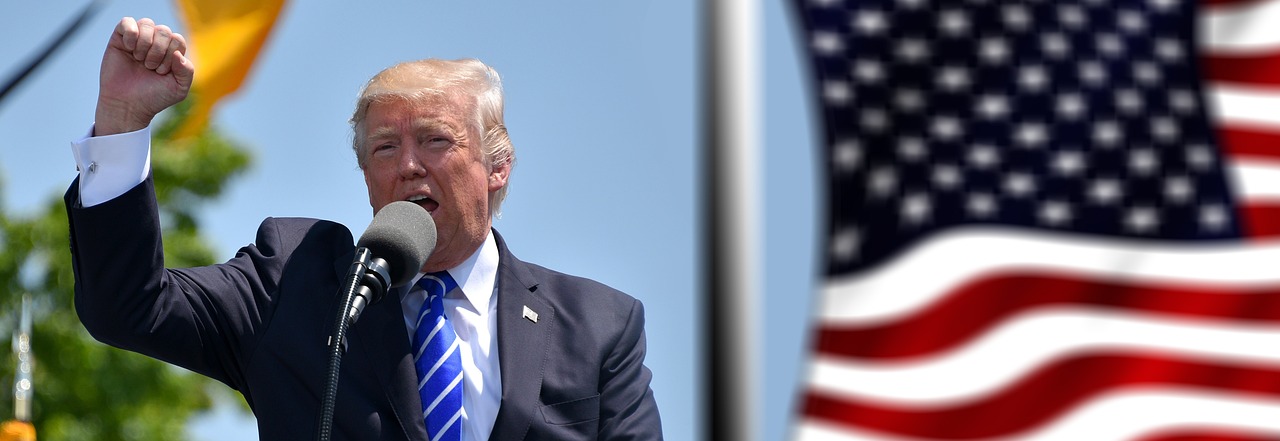
As we mark the first-year anniversary of Donald Trump’s return to presidency, it’s worth pausing to reflect on how global markets have digested a year characterised by fast-paced policy shifts and headline-grabbing geopolitical moves. The regularity with which presidential commentary, or Trump’s social media posts, enter the mainstream media has unsurprisingly led to many client discussions now involving questions around Trump’s behaviour and the potential market implications of such headlines.
This has led to bouts of heightened volatility throughout the year. However, when we take a step back and examine equity market performance for year one of “Trump 2.0”, it paints a less gloomy picture.
Looking back over the last year, there are three key events that stand out…
‘Liberation Day’
2nd April 2025, dubbed ‘Liberation Day’ by the administration, saw Trump on TV screens around the world with his famous tariff board, stating a 10% universal tariff on nearly all US imports and far steeper levies on several major trading partners. As you can imagine, the initial reaction from equity markets was swift and negative. The S&P 500 Index fell almost 11% in sterling terms during the subsequent two sessions, [AM1.1]with the broader MSCI World retracing just short of 10% for the same period. Investors were pricing in the unknown risk of trade disruptions, the subsequent impact on corporate profits and any potential retaliation from Europe, China and elsewhere.
However, sentiment changed quickly, in part thanks to a post on Truth Social by Trump on the morning of 9th April 2025, in which he stated, ‘This is a great time to buy’. Less than four hours later and his administration had announced a 90-day pause on reciprocal tariffs for all countries except China. As a result, equity markets staged a significant rebound and by market close almost 80% of the S&P 500’s losses had been regained. A reversal of his bold initial tariff quotes led to the emergence of the so-called ‘TACO trade’, an acronym for ‘Trump Always Chickens Out’.
The Greenland crisis and tariff threats
Late 2025/early 2026, Trump renewed a longstanding and controversial focus on acquiring Greenland. Trump argued that Greenland is strategically vital for US security, given its location between North America and Europe and proximity to Russia and China. He insisted the US needed Greenland “one way or the other” and repeatedly called for negotiations to transfer sovereignty to the US, even insinuating they may have to take it “the hard way” if negotiations do not prevail.
The situation escalated when Trump threatened tariffs on European NATO allies unless they supported the United States’ aim to acquire the self-governing territory of Denmark. European leaders strongly rejected any notion of Greenland being sold or transferred. This threat led to a stock market sell-off on 19th January 2025 with the S&P 500 Index falling 1.2% in sterling terms.
Trump took to the stage on 21st January for a highly anticipated speech at the World Economic Forum in Davos. His free-wheeling address included the kind of attacks that have become a trademark of his presidency. However, there were four words within his dialogue that mattered most: “I won’t use force” – seemingly ruling out the use of military action on this occasion.
Later that evening, Trump met with NATO Secretary General Mark Rutte, following which he stepped back from threats to impose tariffs as leverage, suggesting a deal was in sight to end the dispute. This provided relief to the market with the S&P 500 Index up 1% the following day. Wall Street commentators quickly framed the Greenland reversal as another case of the ‘TACO’ trade playing out, with tough rhetoric followed by a predictable retreat as markets reacted.
US attack and Venezuelan leadership capture
In early January 2026, US forces carried out a high-profile operation in Venezuela, leading to the capture of President Maduro. The news immediately drew global attention and created a level of uncertainty among investors. It goes without saying that such significant geopolitical events often trigger market uncertainty and risk aversion from investors. However, the broader equity market reaction was relatively muted, in part to thanks to Venezuela’s diminishing role in global trade as a result of years of economic decline.
Parts of the market did, however, benefit, with Gulf Coast oil refiners, which are able to process Venezuela’s unique type of crude, posting daily gains. A number of industrial stocks also experienced an uptick, given the potential to benefit from new or upgraded infrastructure required to extract from Venezuela’s significant oil reserves. Meanwhile, safe haven assets, including gold, also rose slightly, reflecting the rise in ongoing geopolitical risk concerns.
Trump’s first year back in office underscored how quickly global equity markets can react to political and geopolitical events and, despite these challenges, markets continued to demonstrate resilience. While Trump remains in power, volatility should be expected. However, staying invested whilst remaining focused on your long-term investment objectives continues to be the most effective route to navigate short-term uncertainty. This was reinforced last year, as investors who exited the markets following the Liberation Day sell off would, at the time of writing, be 32% worse off (MSCI All World Index, sterling terms), than those who remained invested, underlining the value of a disciplined, long-term approach to investing.