

Whenever I get the mickey taken out of me at work it is usually due to one of three (incredibly boring) things: my love of cricket, my genuine enthusiasm for Microsoft Excel or my undying affinity for ‘boring’ companies. To be honest, I'm proud of all three, much to the disdain of 18-year-old me, and as much as I’d like to give you my thoughts on Joe Root being reinstated as captain of the test team, it’s my last point that I’d like to expand on today.
Let me clarify what I mean by ‘boring’ companies. I like companies that have strong levels of recurring revenue, moats around them and are, for all intents and purposes, unchallenged in ‘unsexy’ industries. It would be surprising to see huge moves in these companies on a day-to-day basis, however, what one would hope is that these steadily compound in portfolios over time.
Now, before compliance tell me off, I just want to make it clear that the following is my own opinion and should not be taken as financial advice.
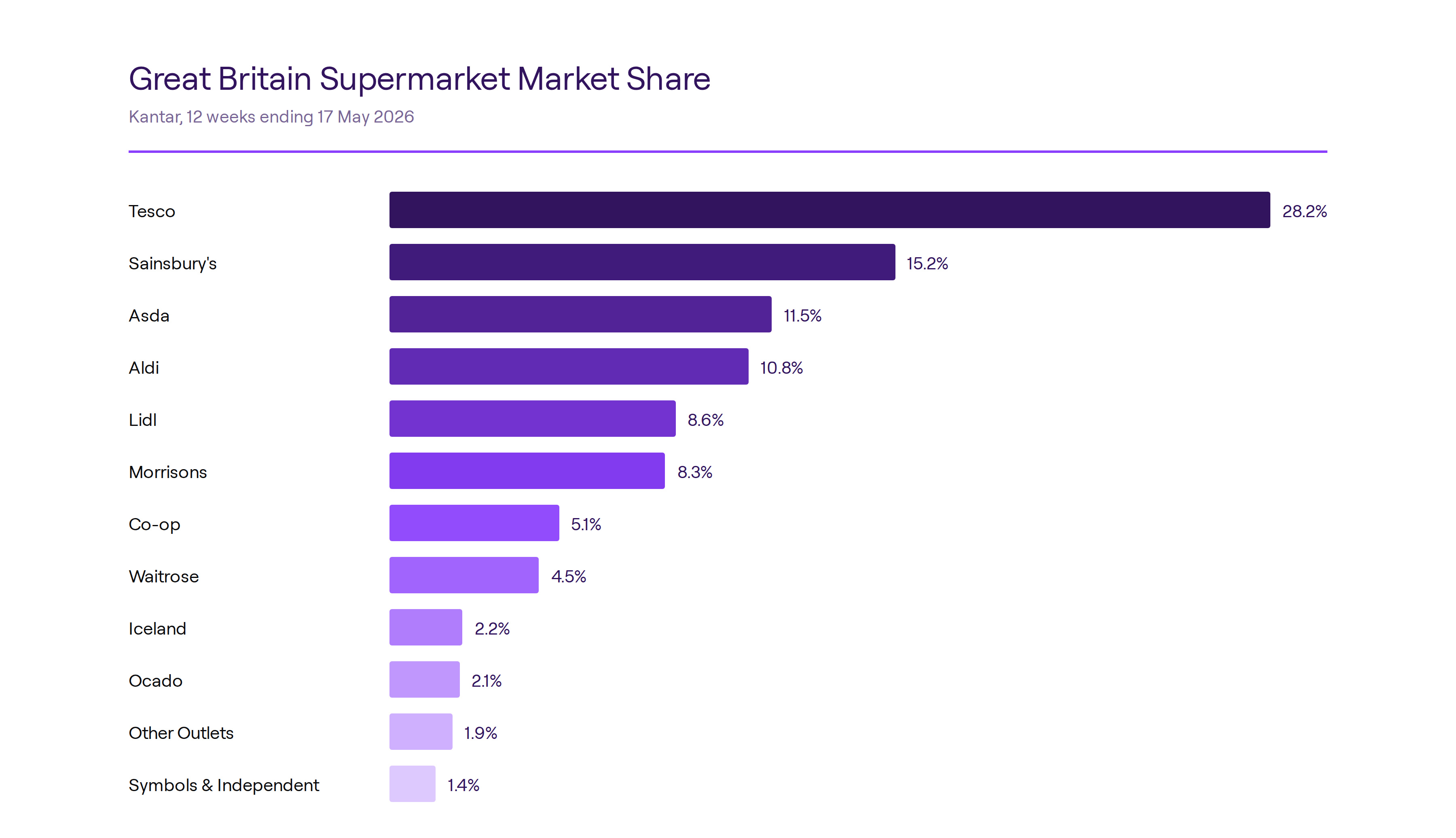
Tesco, in my humble opinion, is one of the finest companies in the UK. Not because its product is better than any other supermarket, or its prices are cheaper, but because of the moat that it has around it. It has more market share than Sainsbury’s and Asda (the next two biggest supermarkets in the UK) combined, is steadily growing its dividend and has gone somewhat under the radar despite returning 31.5% since the beginning of last year.
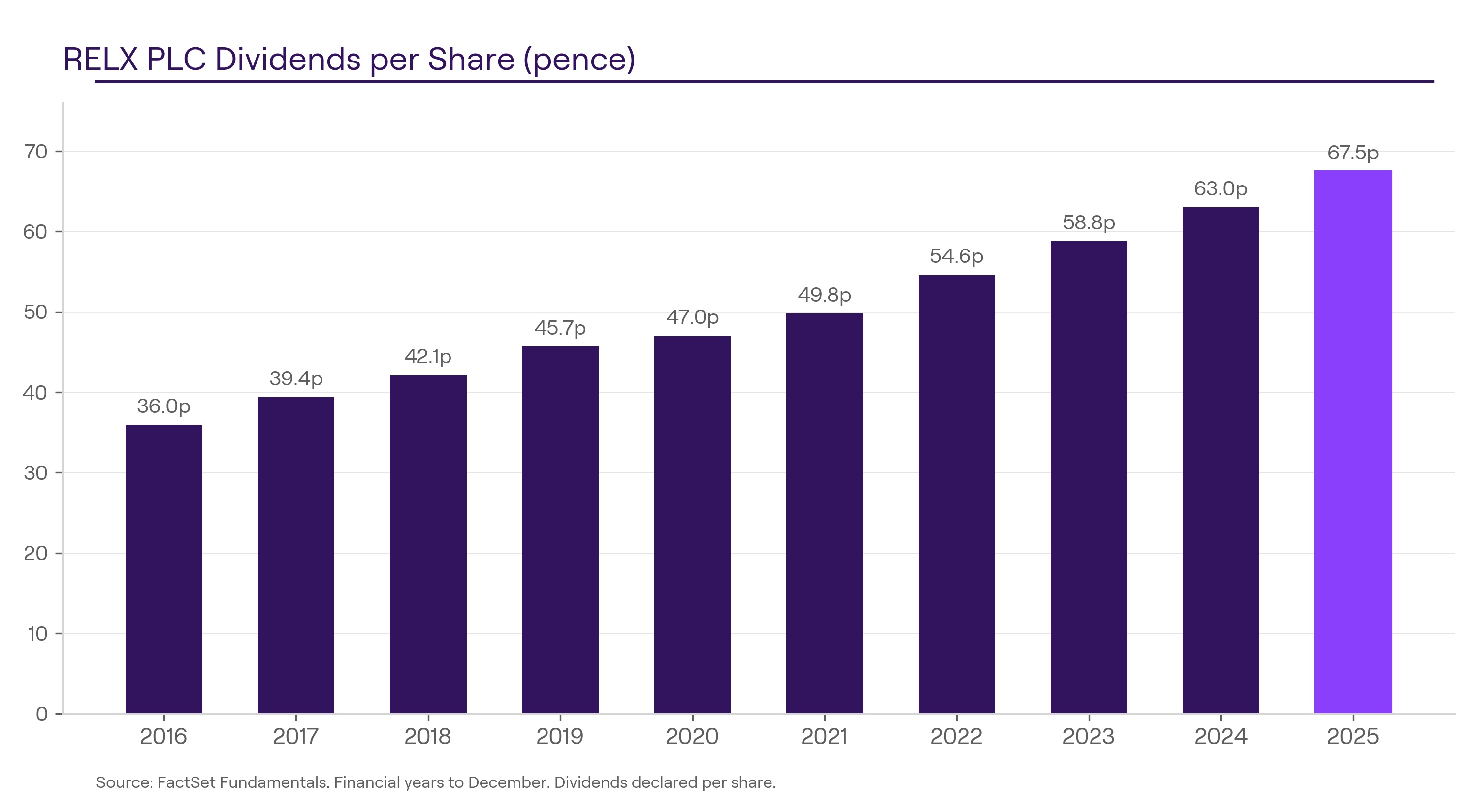
Another company that my colleagues are probably sick of hearing about is RELX. Unlike Tesco, it isn't a company that most people would instantly recognise, but chances are many professionals use its products every day without giving them a second thought. RELX provides the information and tools that lawyers, doctors and insurers rely on to do their jobs. That might not sound particularly exciting, but therein lies the appeal. Fundamentally RELX is a database of knowledge, and in a world of infinite information, professionals want that information to be correct, hence RELX's moat.
RELX has had a much trickier time than Tesco so far this year, with the share price marked down sharply in February amid concerns that advances in AI, including a series of high-profile model releases, could undermine demand for its products. My own view is rather different, in that RELX's value has never really been the information itself. Rather, it is the curation, the verification and the trust that professionals place in it. A lawyer cannot cite a chatbot in court, and a doctor cannot base a treatment decision on a potential LLM hallucination. If anything, a world drowning in plausible sounding but unreliable content makes a trusted database of verified knowledge more valuable, not less, and RELX has been embedding AI tools into its own products for years. They have been generating record levels of revenue, and with that, they are returning more money to shareholders, through a growing dividend and share buybacks.
If you’ve made it this far, don't worry, I'm not going to give you any more examples. However, I hope that the key point you take away from this is that when looking for opportunities in the market, it is not always companies that are going to 10x that you need to be looking at. Sometimes it is the ones that, instead, are going to quietly compound over years, pay a stable dividend or both.
There is a reason opportunities like these exist. Markets are made up of people, and people, by their very nature, are drawn to stories. The companies making headlines are rarely the only opportunities in the market and sometimes, in fact, it’s the businesses quietly selling pasta or legal databases that are missed, presenting the opportunity to buy quality at a reasonable price. ‘Boring’, in other words, can be a discount.
None of this is to say there is no place for the more exciting growth companies in a portfolio; there absolutely is. The ‘exciting’ businesses reshaping industries, whether in AI, defence or healthcare, can deliver returns and headlines that no supermarket ever will, and some of the best investments of the past two decades have been exactly these sorts of companies. The ride is rarely comfortable along the way though, and that is why I think of the two as complementary rather than competing. The boring compounders can do the heavy lifting quietly in the background, which in turn makes it easier to hold the more volatile names through their inevitable rough patches without (hopefully) losing sleep or, worse, selling at the bottom.
A portfolio built entirely of excitement is exhausting, and one built entirely of boredom arguably leaves opportunity on the table. So, next time you're weighing up where to invest, by all means invest in the stories, but spare a thought for the ‘boring’ ones too. To use a cricket analogy (I couldn't possibly resist), I can absolutely see the appeal of T20 and the Hundred. The crowds love it and games can be won or lost in fifteen minutes. Test cricket, on the other hand, is built on batting time and grinding out results, and a good summer, like a good portfolio, has room for both.
All views in this article represent the opinions of the author and do not constitute investment advice.