

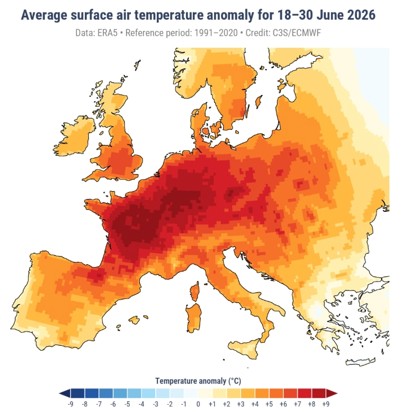
As most of us have undoubtedly realised, it’s hot outside, extremely hot! The UK has just passed the peak of the fifth heatwave to hit the country this summer, with sunny conditions expected to continue. This summer is shaping up to be the hottest on record in the UK, which got some of us thinking (or rather sweating) about the wider investment implications beyond the obvious signs of dried-out gardens and struggling plants.
The hidden cost of heat
Increasingly, extreme heat is taking a toll on workers and the wider economy. The International Labour Organization estimates that more than 2.4 billion workers globally are exposed to excessive heat and, by 2030, heat stress is projected to reduce total working hours worldwide by 2.2%, which is equivalent to 80 million full-time jobs and $2.4 trillion in economic losses.
As temperatures rise above 25°C, productivity falls. Allianz research estimates that productivity can decline by around 3% for every degree above 30°C sustained over multiple days, with the sharpest declines occurring in construction, agriculture, manufacturing and transport.
In France, the economic cost of this year's heatwave has already been estimated at approximately €2.8 billion, exceeding the impact experienced during the infamous 2003 European heatwave.
The impact of rising temperatures will be particularly apparent in Europe, with its ageing buildings, limited heat-conscious design and some pushback against energy-hungry cooling systems on ESG grounds.
As governments, businesses and households invest to adapt, these pressures are beginning to create clear investment opportunities across a range of sectors. This is exactly the kind of structural shift our changing world theme is built to capture.
Within the Titan Global Blue Chip Fund, we hold utilities and energy companies positioned for this transition, including Siemens (which also focuses on air conditioning) and Schneider Electric (energy management and data centre infrastructure).
The Titan Global Solutions Fund, which forms part of our multi-manager range, captures the same theme through a diversified set of holdings, investing in basic needs through Regnan Sustainable Water and Waste, resource scarcity through Robeco Smart Materials Energy and the energy transition through Polar Smart Energy and Atlas Infrastructure.
It's no surprise that these holdings have performed strongly year to date. Robeco Smart Materials and Polar Capital Smart Energy are both up more than 50% as at 13th August, helping to drive the Global Solutions Fund's return to over 16%.
While rising temperatures are driving investment in cooling, energy efficiency and infrastructure, heat itself is only part of the story. As many regions are discovering, prolonged periods of extreme weather are placing increasing pressure on another critical resource: water.
Water is becoming the new commodity
Drought conditions and declining water levels across parts of Europe and the US are beginning to affect industries ranging from agriculture and power generation to technology and AI.
For example, the Rhine River, one of Europe's most important trade routes, has fallen to levels that threaten freight transport. Similar conditions in 2018 cost the German economy an estimated €4 billion and disrupted supply chains across the continent. In the US, prolonged drought conditions along the Colorado River, which supports industries worth over $1 trillion annually, are creating challenges for agriculture, utilities, semiconductor manufacturers and data centres.
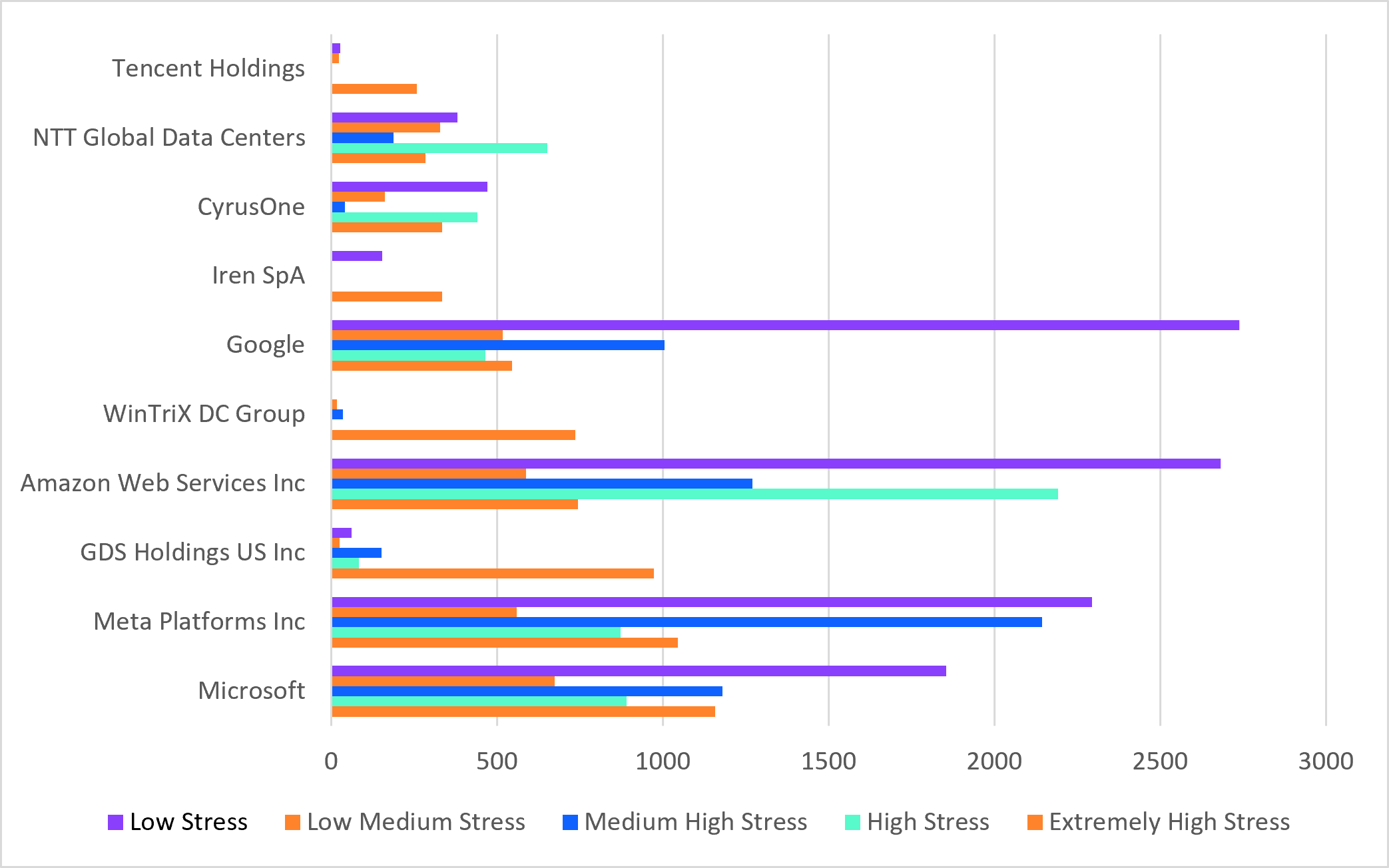
Technology is also being increasingly exposed to water scarcity due to growing reliance on data centres. The rapid expansion of AI is driving significant investment in vast amounts of data centre infrastructure, with facilities dependent on both reliable electricity supplies and water-intensive cooling systems to operate efficiently.
It is estimated that 42% of global data centre capacity could be located in regions facing high or extreme water stress by 2030, creating a significant challenge for the technology sector.
Major operators, including Amazon Web Services, Microsoft and Meta are already investing heavily in advanced cooling technologies, closed-loop cooling systems and water-recycling infrastructure to reduce their dependence on increasingly scarce water resources.
Arizona Data Centre Water Exposure by Operator
The impact of extreme weather extends beyond water supply. Sectors that appear to benefit from hotter, sunnier conditions can face unexpected challenges, including, perhaps somewhat surprisingly, renewable energy generation. While the recent heatwave has helped to drive strong levels of solar power production, there is an interesting paradox.
Solar panels do not perform best in extreme heat. As temperatures rise beyond their optimal operating range, efficiency begins to fall. Research by the World Economic Forum suggests extreme temperatures can reduce solar panel efficiency by between 10% and 25%, with the added risk of lasting damage to the hardware.
The broader picture is clear. Climate adaptation requires serious investment. Europe is already contending with ageing roads, buildings and energy infrastructure, tighter regulation around cooling systems and mounting pressure to overhaul existing systems. This is precisely the kind of challenge, and opportunity, our thematic funds are designed to address. From energy efficiency and infrastructure upgrades to water management and resource scarcity, the need for climate adaptation is creating long-term investment opportunities across multiple sectors.
“BLOOMBERG®” and the Bloomberg indices listed herein (the “Indices”) are service marks of Bloomberg Finance L.P. and its affiliates, including Bloomberg Index Services Limited (“BISL”), the administrator of the Indices (collectively, “Bloomberg”) and have been licensed for use for certain purposes by the distributor hereof (the “Licensee”). Bloomberg is not affiliated with Licensee, and Bloomberg does not approve, endorse, review, or recommend the financial products named herein (the “Products”). Bloomberg does not guarantee the timeliness, accuracy, or completeness of any data or information relating to the Products.