

"There's a Starman waiting in the sky
He'd like to come and meet us
But he thinks he'd blow our minds"
David Bowie (1972)
For most of my life, space has occupied a curious position in the investment world. It has captured our imagination, inspired generations of science fiction writers and consumed vast amounts of government spending, but it has rarely been viewed as a serious commercial opportunity.
Last week may prove to be the moment that changed.
The IPO of SpaceX dominated financial headlines. Elon Musk became, by most measures, the world's first trillionaire as Space X briefly became one of the most valuable businesses on the planet and investors rushed to back a company whose ultimate ambition is, quite literally, to make humanity a multi-planet species.
Whether the valuation ultimately proves justified is almost beside the point. History will decide that. The more interesting question is whether investors have finally started to believe that space itself is becoming an economy.
Captain Kirk would have had a view on this. Star Trek famously described space as "The Final Frontier", and my old English teacher would regularly deploy the show's opening line in class as a textbook example of a split infinitive. "To boldly go," he would point out with evident satisfaction, "should properly be ‘to go boldly’." I suspect he did not anticipate that, half a century later, boldly going would become a serious investment thesis. Yet here we are.
At first glance, the idea of space as an economy may sound far-fetched. Most of us are unlikely to be commuting to Mars anytime soon. Yet almost all transformative technologies begin life looking improbable. The internet was once a niche curiosity. Mobile phones were expensive toys for executives. Artificial intelligence was confined to academic papers and Hollywood films.
When investors rushed into internet companies in the late 1990s, many believed they were investing in websites. In reality, they were investing in an entirely new layer of infrastructure: fibre optic cables, semiconductors, data centres and communications networks. The greatest long-term value often came from the companies building the foundations, not those capturing the headlines. Space may follow the same pattern.
Much of the infrastructure that underpins modern life already depends on space-based systems. Satellite networks support communications, navigation, weather forecasting, financial transactions and national security. Every GPS signal, aircraft route, shipping movement and international financial transaction relies, to some degree, on infrastructure beyond our atmosphere. The war in Ukraine demonstrated just how important space-based communications have become. Most of us interact with space every day without giving it a second thought.
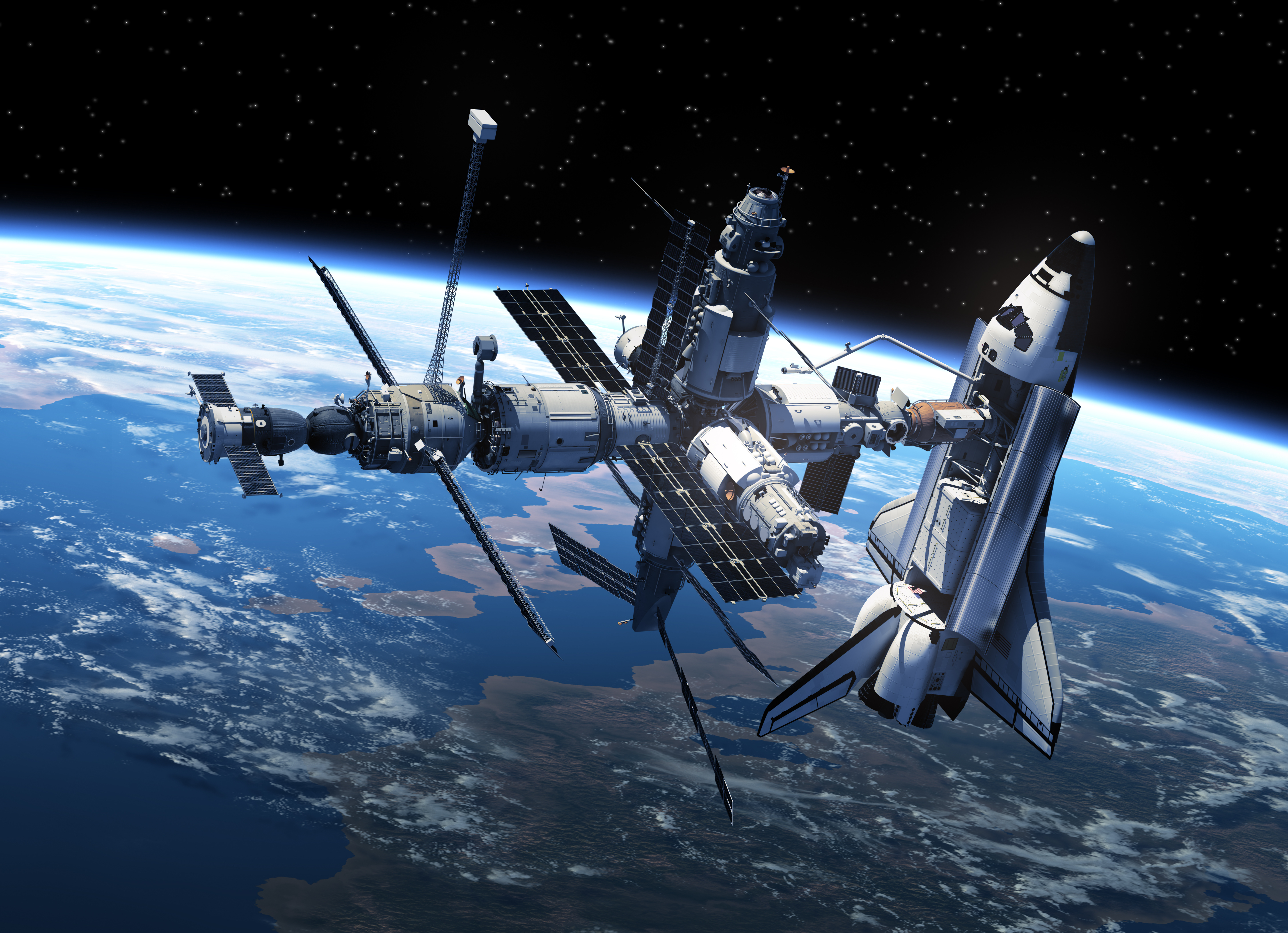
The next phase may be even more significant and geopolitics will shape it. The original space race was a contest between the United States and the Soviet Union. Today's competition looks very different but feels equally consequential. China has invested heavily in launch capability, space stations and lunar exploration. The United States, increasingly relying on private enterprise led by companies such as SpaceX, is pushing back. A new space race is already underway. Yet it attracts far less attention than debates surrounding tariffs or artificial intelligence and that may be precisely why it matters. Some of the most important investment themes emerge quietly, long before they become obvious to investors.
For investors, the opportunity may not lie in buying space companies directly. It may lie in recognising the industries that will benefit from the growth of the space economy. The internet needed fibre optic cables. Artificial intelligence needs electricity and semiconductors. Building that infrastructure may require vast quantities of copper, rare earth minerals, advanced alloys and energy. Demand for infrastructure, communications networks and specialist manufacturing is likely to grow in ways that are already, quietly, investable.
Of course, valuations will become stretched, expectations will run ahead of reality and some companies will inevitably disappoint. That has been true of every major technological revolution in history.
Investors do not need to believe that we are all heading to Mars. They simply need to recognise that the infrastructure supporting that ambition is already being built and the potential long-term value on offer.