This week confirmed the global upward trend in interest rates, with the probability of hikes continuing to rise, and the impact is being felt by borrowers and consumers’ alike. But what are the drivers behind this shift and how can investors navigate, and ultimately benefit from, the changing landscape?
On Thursday, the Bank of England left interest rates unchanged at 3.75%, mirroring the Federal Reserve's hold a day earlier. However, it warned that the UK may need to brace for hikes later this year, stating that "higher inflation is unavoidable" due to the war in the Middle East. In response, crude oil prices have surged, hitting highs above $114 a barrel before easing on ceasefire negotiations, only to rise again as talks stalled.
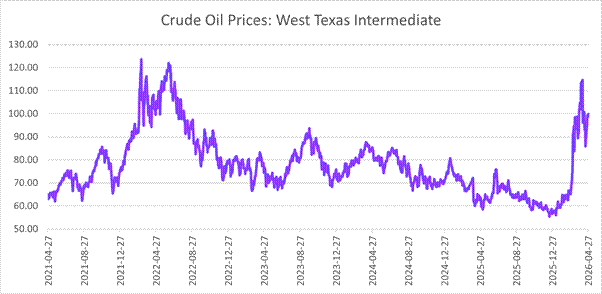
Source: Crude Oil Prices: West Texas Intermediate
Therefore, energy prices are expected to drive inflation figures going forward, with the UK's current 12-month CPI printing at 3.3% as of March 2026, significantly higher than the 2% target that was expected to be achieved by the end of 2026 prior to the conflict.
Forecasters now place UK inflation between 3% and 4% through to the end of 2026, with the International Monetary Fund (“IMF”) positioning the UK around the midpoint of that range.
At the core of the crisis is the Strait of Hormuz, with an estimated 20% of global oil flows. The conflict is challenging the reliability of supply chains and the speed at which oil and natural gas can reach global markets. The chart below puts the global exposure in context: Japan, South Korea and Taiwan are the most exposed to the disruption in the Strait, as the vast majority of their oil and gas imports pass through it.
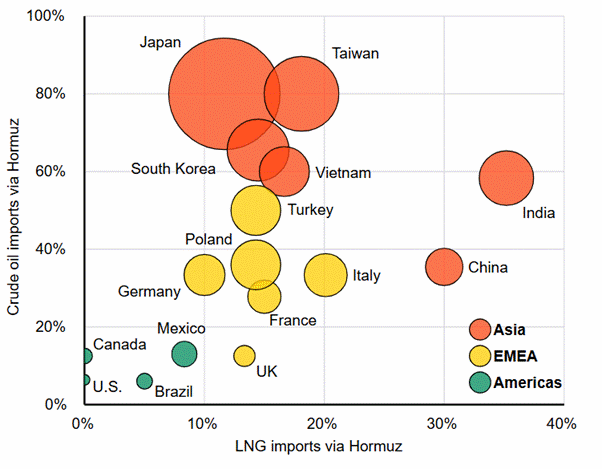
Source: BlackRock Investment Institute (April 2026) (data sourced from IEA, U.S. EIA, GIIGNL, OPEC, and tanker-tracking databases)
European nations, including Germany, France and the UK, sit in the middle of the pack, but exposure remains meaningful. The IEA has warned that Europe has around six weeks of jet fuel reserves remaining as the Iran war strains supply, a statistic that could dampen the holiday experience this summer.
So, what should investors do?
The honest answer is don't panic. Typically, these events and bouts of volatility subside. However, periods like this do provide an opportunity to reassess the suitability of your portfolio and your long-term objectives. Markets have proven more resilient than many expected, with global equities continuing to deliver positive returns this year despite the sharp sell-off in March. In sterling terms, global equities are up approximately +4.7% year to date, with many markets, including US markets, trading at or near all-time highs.
The kind of daily price swings seen during periods like these have historically penalised investors who rushed to liquidate, compared to those who remained invested. As a general rule, investors should revisit their time horizon before making any changes; for those with a long-term view, short-term volatility rarely justifies a wholesale change in strategy.
That said, the current environment historically has rewarded those paying attention to where their money is allocated. With genuine opportunities across cash, fixed income and equities, it is worth considering how these have evolved and what their outlooks are for the near future.
For cash, the picture has changed materially. As our cash manager, Dean Halliday, noted recently, deposit and certificate of deposit rates have risen sharply since the conflict began. One-year fixed rates are now above 4.6%, compared to 3.8% just a few months ago. For clients holding funds in low-rate accounts, the opportunity cost of inaction has rarely been clearer. With further rate hikes still possible, shorter durations may make sense, as they provide flexibility to benefit from rising rates. Read Dean’s update here.
For those seeking income, the yield environment is increasingly supportive. Our cautious income-oriented strategies are currently generating yields approaching 5%, while our higher income offering, at 6%, presents an alternative to equities, for those clients prioritising capital preservation and regular income.
These are not high-risk bets on the energy prices; rather, they are diversified, lower-volatility strategies that are benefiting from a broader uplift in yields.
Finally, across our multi-manager range, our equity solutions, Global Blue Chip and Global Solutions, take a thematic approach that holds energy and renewables as a key long-term structural play. This positioning has been reflected in performance, with Global Blue Chip up 7.5% and Global Solutions up 9.9% year-to-date to the end of April.
Within the Titan Global Solutions Fund, underlying allocations through KBI Infrastructure, Polar Capital Smart Energy and Robeco Smart Materials provide direct exposure to the infrastructure at the heart of the energy transition and supply story.
Similarly, Global Blue Chip's ‘changing world’ theme dedicates approximately one-third of the portfolio to companies positioned to benefit from long-term structural shifts in the global economy. Within this, energy and mining names are prominent, including ExxonMobil, RWE, Glencore and Baker Hughes, businesses that are direct beneficiaries of elevated energy prices and the ongoing search for supply security.
The conclusion across all of this is straightforward: whether your priority is preserving capital, generating income or growing your portfolio over the long term, the current environment offers more opportunities than may initially be apparent.
If you would like to discuss how any of the above could work for your portfolio, please do not hesitate to get in touch with one of our dedicated team members.