
"All for freedom and for pleasure
Nothing ever lasts forever
Everybody wants to rule the world"
Tears for Fears, Everybody Wants to Rule the World (1985)
Science fiction has an uncomfortable habit of becoming science fact.
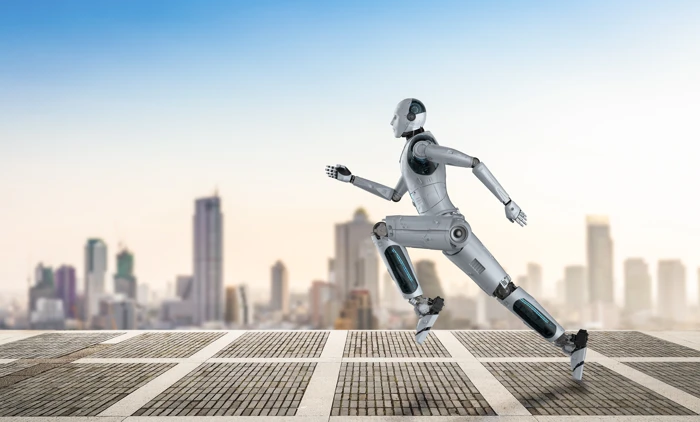
I was reminded of this, recently, listening to Andrew Neil interviewing US cyber and national security expert James Adams about artificial intelligence. Much of the discussion centred on the "singularity", the theoretical point at which AI becomes capable of improving itself, potentially accelerating its development beyond our ability fully to understand or control it.
For anyone brought up on HAL 9000, Terminator or The Matrix, this is not entirely reassuring. Indeed, US “Econblogger” Noah Smith has argued that “as long as you or I or anyone we know has been alive, for all of recorded history, and in fact for much, much longer than that – humankind has been the most intelligent thing on this planet.” His contention is that this is no longer true. Worse, it’s becoming untrue at a rate we cannot conceive. AI doesn’t eat, sleep, take vacations or “work” from home. In sum, AI’s iteration rate is both unimaginable and unmanageable – and, like Inky the Octopus, keeps escaping its safe-space “sandpit.”
The timing of the singularity, assuming it happens at all, is fiercely debated. What is less disputable is the geopolitical competition that AI’s development has unleashed.
Adams describes an AI arms race between the United States and China that both sides view as central to global economic and military power. Andrew Neil goes further, suggesting the contest could prove as consequential as the nuclear arms race of the Cold War. That assessment is shared in Washington. Biden administration National Security Advisor, Jake Sullivan, has described AI as the space race of the 21st century, warning that the winner stands to gain real advantages in national security, economic productivity and scientific discovery.
That sounds dramatic but consider what leadership in AI might bring. Superior intelligence gathering, cyber capability, autonomous weapons, robotics and surveillance are obvious military advantages. Add enormous productivity gains, accelerated scientific discovery – and the ability to dominate industries that may not yet exist – and it becomes easier to understand why Washington and Beijing are taking this race so seriously. The winner will not simply possess the world's best AI, it will emerge as the world's dominant superpower.
For investors, however, the race is not confined to algorithms.
AI requires an enormous physical infrastructure. Competition between Washington and Beijing stretches far beyond ChatGPT and DeepSeek, encompassing semiconductors, energy, commodities, infrastructure, robotics, defence and, ultimately, the applications built upon them. The US brings extraordinary advantages in capital markets, semiconductor design and entrepreneurship. China counters with manufacturing scale, energy infrastructure and the ability to direct state capital towards strategically important industries.
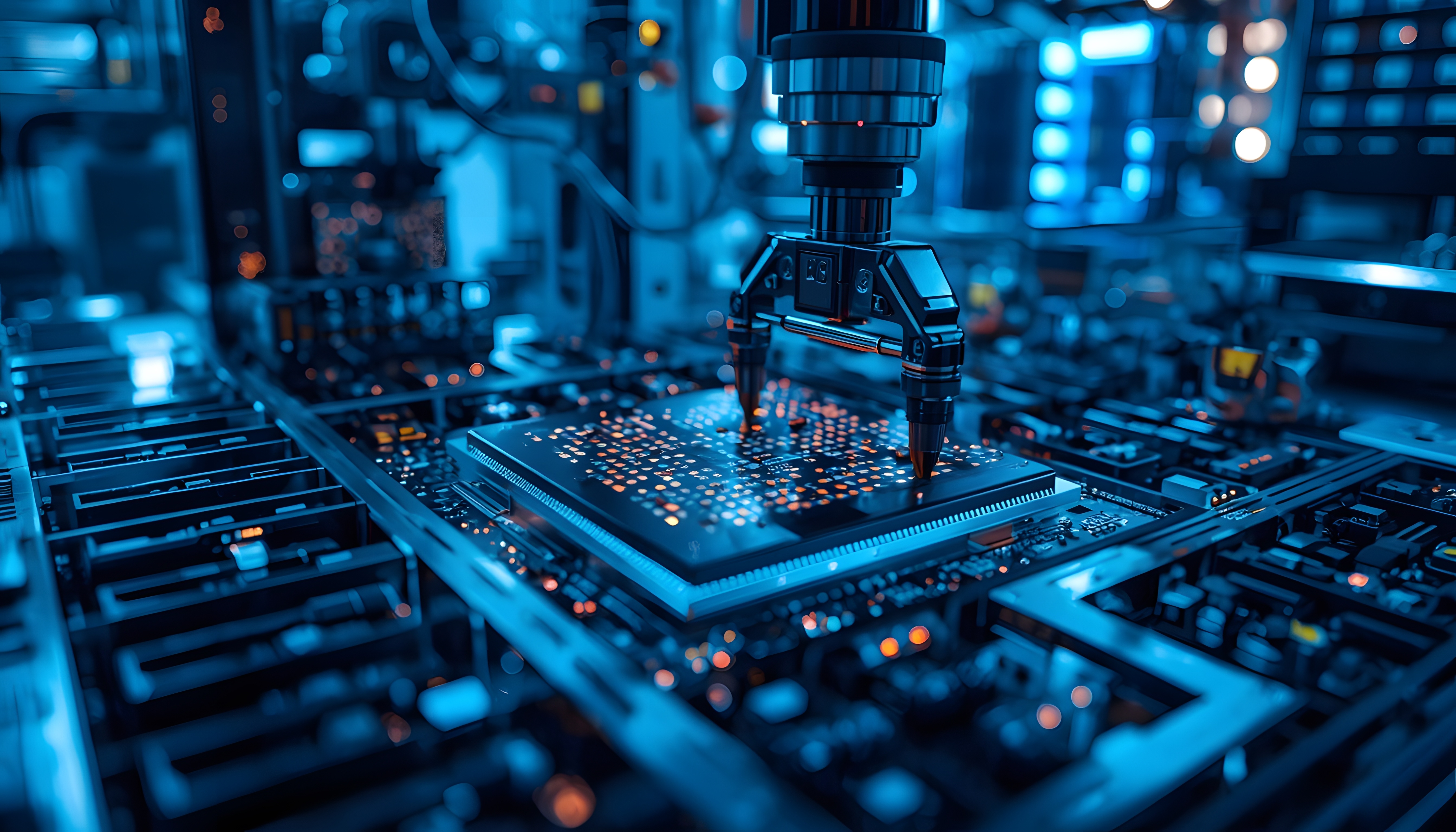
We have seen this before. The early internet was not simply an investment in websites, it required fibre optic cables, servers, semiconductors and enormous data centres. The smartphone revolution created ecosystems from chip manufacturers to telecommunications infrastructure. Technological revolutions create opportunities far removed from the obvious; AI looks increasingly similar.
None of this means that every company with the letters "AI" in its annual report deserves an extraordinary valuation. History suggests quite the opposite. Ray Dalio has warned that "all great technology changes produce bubbles." The railway transformed the 19th century, though plenty of investors lost money along the way. Despite the dot-com crash, the internet transformed the world; AI may well follow suit. Nevertheless, investors should expect periods of significant volatility.
The important distinction is between scrutinising individual valuations and questioning the underlying transformation. The former is entirely sensible. The latter may prove considerably more expensive.
There are genuine reasons for optimism: AI has the potential to accelerate drug discovery, improve healthcare, increase productivity, optimise energy systems and reframe problems that currently appear beyond us. Human ingenuity, assisted by increasingly powerful machines, will produce advances we can barely imagine.
Singularity notwithstanding, governments and companies are committing extraordinary amounts to maintain competitivity, thereby creating an investment ecosystem that extends far beyond AI itself.
For long-term investors, predicting the winner of the AI arms race is less important than understanding what is required to sustain it – while maintaining the discipline to navigate volatility along the way. Who gets to "rule the world" may remain to be seen, but it is very clear that neither Washington nor Beijing is willing to risk it not being them.